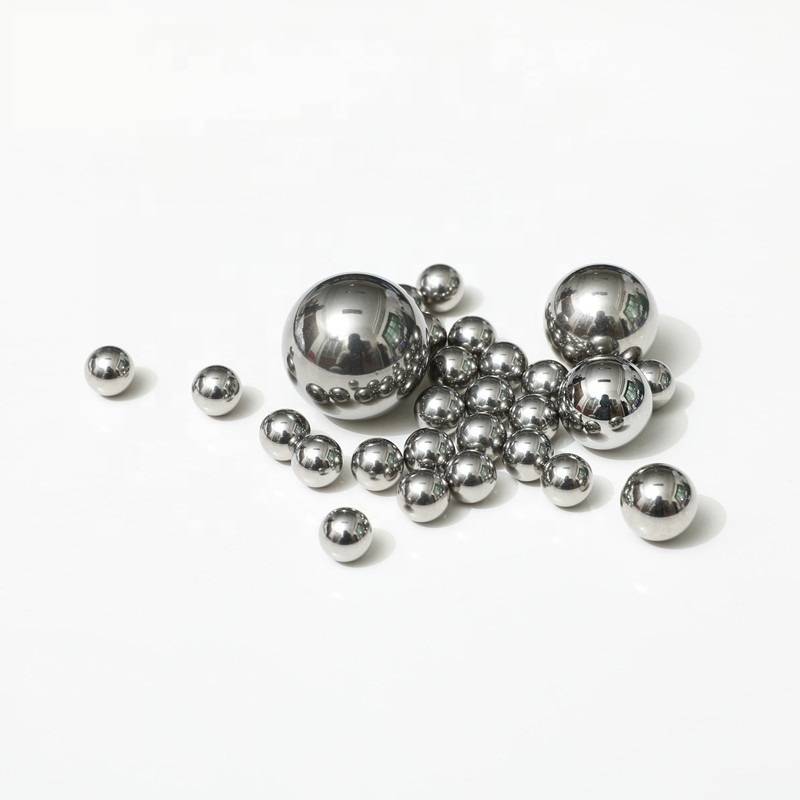
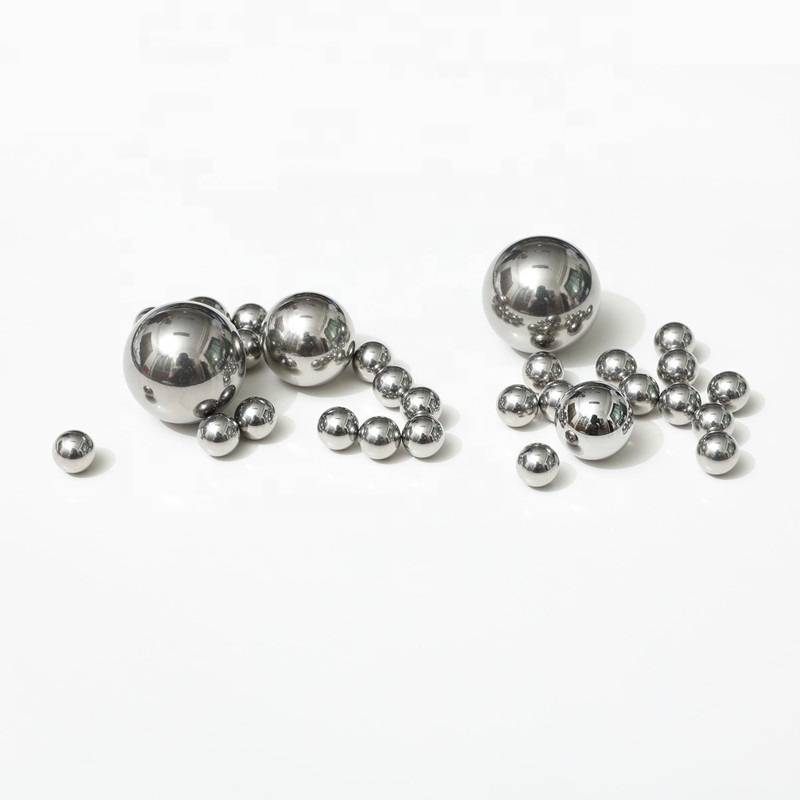
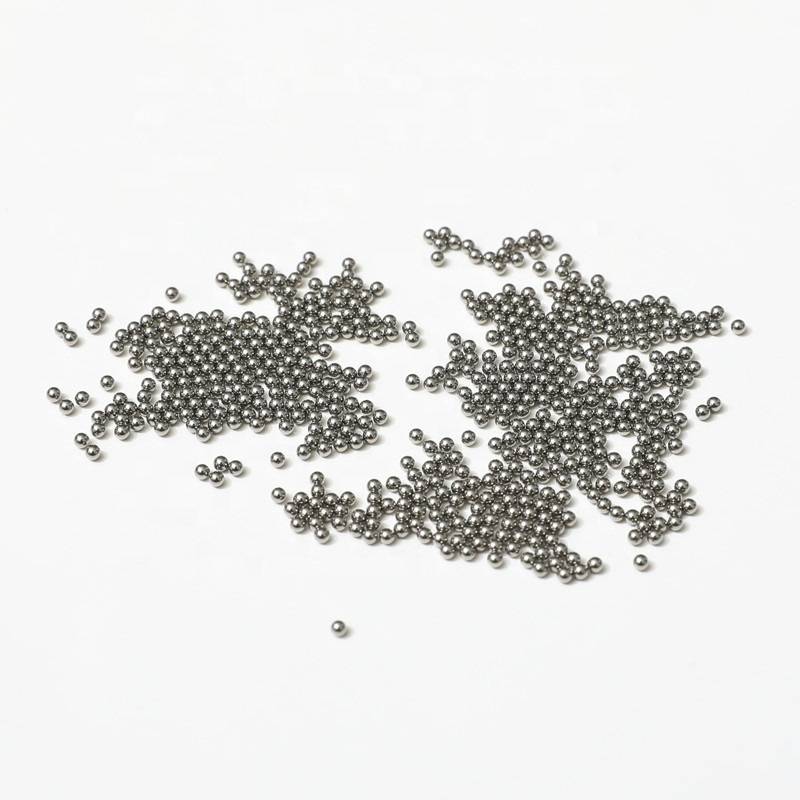
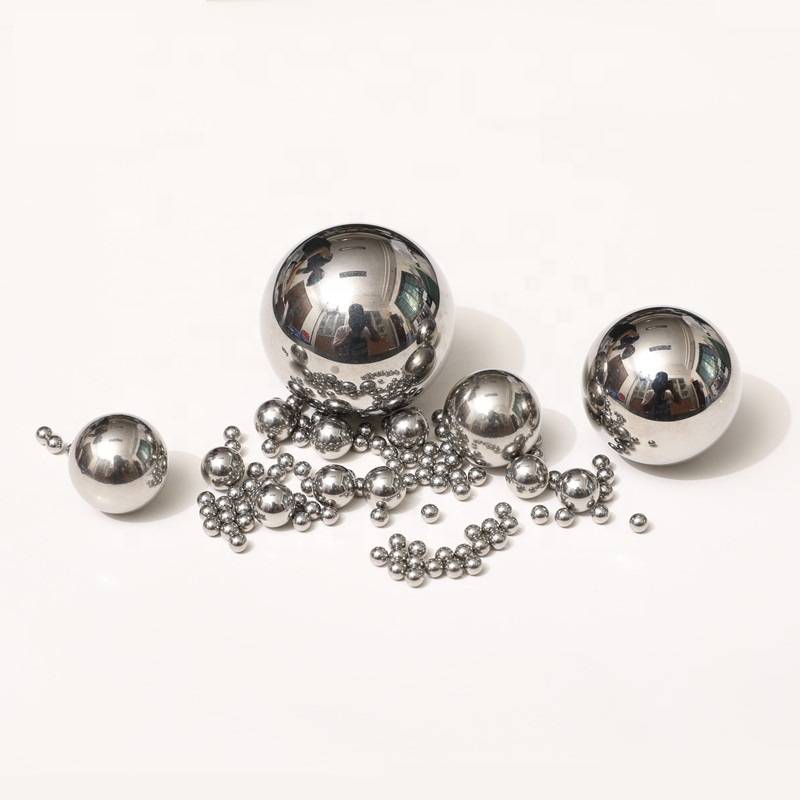
AISI 440C Stainless Steel Balls 0.5mm-100mm
AISI 440C stainless steel balls are the premium flagship grade of the AISI 440 martensitic stainless steel ball family, engineered for industrial applications that demand an unrivaled balance of high hardness, exceptional wear resistance, and reliable moderate corrosion resistance.
AISI 440C stainless steel balls are the premium flagship grade of the AISI 440 martensitic stainless steel ball family, engineered for industrial applications that demand an unrivaled balance of high hardness, exceptional wear resistance, and reliable moderate corrosion resistance. As a heat-treatable high-carbon chromium stainless steel, AISI 440C outperforms its lower-grade counterparts (440A/440B) in mechanical strength and wear performance, while filling the critical engineering gap between corrosion-prone carbon steel balls (e.g., AISI 52100) and low-hardness austenitic stainless steel balls (e.g., 304/316). It is the global go-to material for spherical components operating in corrosive/humid environments where both anti-rust and anti-wear properties are non-negotiable, and its standardized production and consistent performance make it a staple in precision engineering, industrial hardware, and specialized machinery.
Core Chemical Composition (ASTM Standard)
AISI 440C’s tailored chemical formulation is the foundation of its superior performance, with high carbon content for hardenability and high chromium content for passivation and corrosion resistance. All elemental limits are strictly controlled to avoid impurities that compromise mechanical and anti-rust properties:
- Carbon (C): 0.95–1.20% (key for heat treatment hardenability and wear resistance)
- Chromium (Cr): 16.00–18.00% (forms a dense chromium oxide passive film for corrosion resistance)
- Manganese (Mn): ≤1.00%
- Silicon (Si): ≤1.00%
- Phosphorus (P): ≤0.040% (max impurity)
- Sulfur (S): ≤0.030% (max impurity)
- Iron (Fe): Balance
No molybdenum or nickel is added in the standard AISI 440C formulation, keeping it a cost-effective high-performance grade without compromising its core mechanical characteristics.
Key Mechanical & Physical Properties (After Heat Treatment)
AISI 440C stainless steel balls undergo a precision heat treatment process (solution annealing + oil quenching + low-temperature tempering) to optimize its martensitic microstructure, eliminating soft spots and ensuring uniform performance across the entire spherical surface. This treatment yields industry-leading mechanical properties that define its application scope, with no compromise to its inherent corrosion resistance:
- Rockwell Hardness: HRC 58–62 (the highest hardness among standard AISI 440 grades; 20–30% higher wear resistance than 440A/440B)
- Wear & Contact Fatigue Resistance: Exceptional resistance to rolling/sliding wear and cyclic contact stress, suitable for moderate to heavy load applications
- Dimensional Stability: Minimal deformation under ambient to medium temperature fluctuations (up to 300°C) and static/dynamic loads
- Corrosion Resistance: Effective against atmospheric oxidation, freshwater, humidity, mild organic chemicals, and mild industrial fumes; far superior to carbon steel balls (e.g., AISI 52100) and enhanced by standard passivation treatment
- Surface Hardness: HV 600–650 (after polishing), with a smooth surface that reduces friction and vibration in dynamic operation
- Toughness: Good impact resistance for normal operating conditions, avoiding brittle fracture in industrial machinery and precision equipment
Note: AISI 440C trades minor corrosion resistance (compared to austenitic 304/316 stainless steel) for drastically higher hardness and wear performance—an optimal tradeoff for most engineering scenarios requiring both anti-rust and anti-wear capabilities.
Precision Manufacturing & Quality Standards
AISI 440C stainless steel balls are produced via a specialized, material-optimized manufacturing process that addresses the unique characteristics of martensitic stainless steel (e.g., hardenability and post-heat treatment dimensional control). Every step is strictly calibrated to ensure uncompromising precision, performance consistency, and surface integrity:
- Cold Heading: Near-net shape spherical forming to maximize material density and structural uniformity, minimizing machining waste
- Custom Heat Treatment: Precision temperature-controlled quenching and low-temperature tempering to achieve the HRC 58–62 hardness range and uniform martensitic microstructure
- Centerless Grinding: High-precision spherical grinding to meet tight dimensional tolerances for roundness and diameter
- Lapping/Polishing: Ultra-fine surface finishing for a mirror-like polish, with surface roughness Ra ≤ 0.01 μm for high-precision grades
- Passivation: Standard post-production treatment to thicken the chromium oxide passive film, boosting inherent corrosion resistance and preventing surface rust
- 100% Non-Destructive Testing: Ultrasonic flaw detection (internal defects), visual/laser surface inspection (scratches/pits), and random hardness spot checks; additional intergranular corrosion resistance testing for stainless steel-specific quality control
Finished AISI 440C steel balls comply with the most stringent international industry standards: ANSI/ABMA (American Bearing Manufacturers Association), ISO 3290 (Rolling bearings - Steel balls), and DIN 5401. They are available in precision grades from commercial G100 to ultra-precision G5/G10, with sphericity tolerance down to a few micrometers and diameter consistency within ±0.001mm for high-end variants.
Primary Industrial Applications
AISI 440C stainless steel balls are the ideal solution for corrosive, humid, outdoor, or hygiene-sensitive working environments where both wear resistance and anti-rust performance are critical—scenarios where carbon steel balls fail due to rust and 304/316 balls lack the hardness for long-term wear. Its versatile applications span across key industries worldwide:
- Precision Corrosion-Resistant Bearings: Radial/thrust ball bearings for marine, outdoor, chemical (light-duty), and wastewater treatment machinery
- Food & Beverage Equipment: Conveyors, mixers, valve components, and pump impellers (meets basic hygiene and anti-rust requirements for food processing)
- Marine & Maritime Hardware: Small bearings, pulleys, rigging components, and deck machinery (resists salt air and freshwater corrosion)
- Medical & Lab Equipment: Non-implantable precision instruments, centrifuge parts, and lab mixer components (hygienic, rust-free, and wear-resistant)
- Industrial Hardware & Linear Motion Systems: Door locks, sliding door pulleys, linear guide rails, and ball screws for outdoor/indoor humid facilities
- Automotive & Motorcycle Components: Adjustment system balls, small bearings for outdoor-mounted parts (resists rain and road moisture)
- Aerospace & Outdoor Test Equipment: Precision rotating components for outdoor aerospace ground equipment and environmental monitoring instruments
Competitive Advantages & Customization
Core Unique Selling Points
- 440 Series Peak Performance: Unmatched hardness and wear resistance among AISI 440 stainless steels, with reliable corrosion resistance
- Ideal Performance Balance: Fills the engineering gap between carbon steel (high wear, no rust) and austenitic stainless steel (high rust resistance, low wear)
- Cost-Effective High Performance: No expensive alloy additions (e.g., molybdenum/nickel) in the standard formulation, with standardized production reducing overall costs
- Drop-In Replacement: Directly replace AISI 52100 carbon steel balls in corrosive environments without modifying equipment dimensions
- Low Operational Friction: Ultra-smooth polished surface minimizes friction and vibration, reducing energy consumption and operational noise in precision machinery
Customization Options
AISI 440C stainless steel balls are fully customizable to meet specific application requirements, with flexible options for:
- Diameter: Micro-balls (0.5mm) to large-diameter balls (100mm+), with custom sizes available for special orders
- Precision Grade: G5, G10, G20, G50, G100 (tailored to bearing, hardware, or general industrial use)
- Surface Treatments: Enhanced passivation (food-grade), nickel plating, PTFE coating (additional corrosion/lubrication), and black oxide (for aesthetic and mild wear boost)
- Packaging: Food-grade plastic packaging, anti-rust oil packaging, or vacuum-sealed packaging (for long-term storage and marine shipping)